
Blog
How Many Solar Panels Do You Need for a House in Arizona
October 10, 2026 · Lou Flores
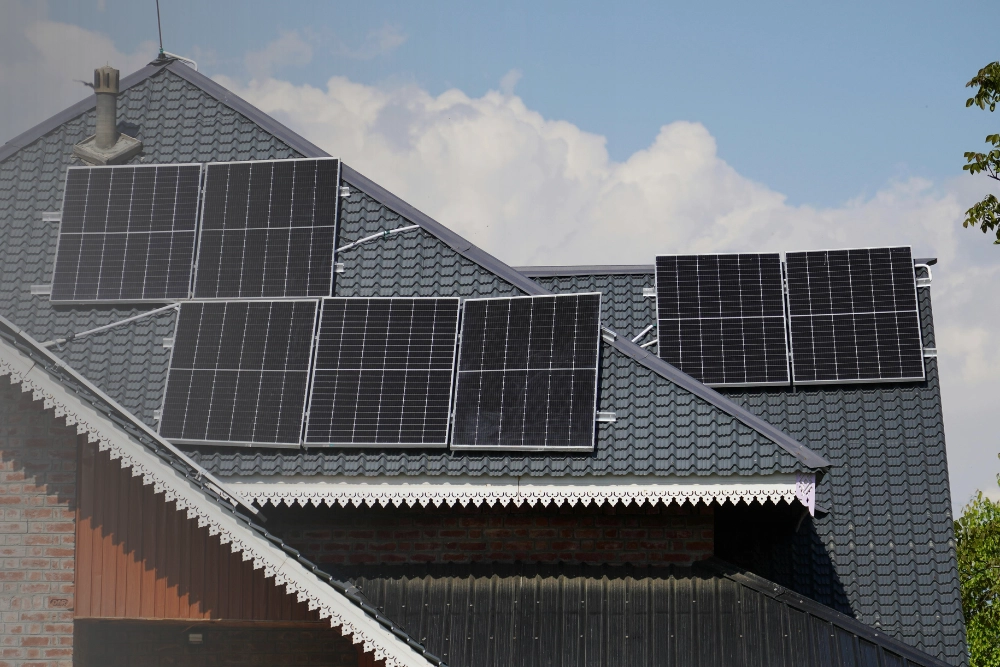
Residential solar panel requirements in Arizona vary based on household electricity consumption, panel capacity, roof conditions, and available sunlight. While many homes may require approximately 15 to 25 solar panels, properties with higher energy demands may need larger systems, particularly during periods of increased summer electricity usage.
Determining the appropriate number of solar panels requires an assessment of your home's energy consumption and the estimated electricity production of the proposed solar system.
In this guide, we'll explain how to estimate your solar panel requirements, calculate the number of panels needed, and consider factors specific to Arizona homes.
How Many Solar Panels Does an Average Arizona Home Need?
The number of panels needed depends more on electricity usage than on the physical size of your home. Two houses with similar square footage can have very different energy requirements because of their air conditioning systems, insulation, appliances, and household habits.
Here is an illustrative comparison using 400-watt solar panels and an assumed average production of 1.6 kWh per panel per day.
| Monthly Electricity Usage | Estimated Solar Panels |
|---|---|
| 600 kWh | 13 panels |
| 900 kWh | 19 panels |
| 1,200 kWh | 25 panels |
| 1,500 kWh | 32 panels |
| 1,800 kWh | 38 panels |
Note: These are illustrative estimates based on 400-watt solar panels producing an average of 1.6 kWh per day. Actual requirements vary depending on sunlight exposure, roof conditions, and system efficiency.
For a more accurate estimate, our residential solar installation services include evaluating household energy usage, roof conditions, and electrical requirements to determine an appropriate system configuration.
How to Calculate the Number of Solar Panels You Need
You can make a preliminary estimate using three pieces of information: your electricity usage, the wattage of the panels you're considering, and the expected energy production at your property.
Step 1: Review Your Electricity Usage
Start with your electricity bills from the past 12 months.
Look for the total kilowatt-hours (kWh) consumed each month. This is a better starting point than your bill amount because electricity rates, fees, and billing structures can affect what you pay.
For example, if your household uses 14,400 kWh annually:
14,400 ÷ 12 = 1,200 kWh per month
In Arizona, summer electricity usage may be considerably higher because air conditioning systems work harder during extended periods of extreme heat.
Using a full year of electricity data helps account for these seasonal differences.
Step 2: Understand Solar Panel Wattage
Solar panel wattage describes the panel's rated power output under standardized testing conditions.
Residential panels commonly have ratings in the hundreds of watts, with 400-watt panels serving as a useful example for estimating system size.
A 400-watt panel has a rated capacity of 0.4 kilowatts (kW). However, it does not produce 400 watts continuously throughout the day.
Actual production changes with sunlight intensity, temperature, shading, panel angle, and other conditions.
Step 3: Estimate Solar Energy Production
For a simplified calculation, suppose a 400-watt panel produces an average of 1.6 kWh per day after accounting for system conditions.
Its estimated monthly production would be:
1.6 kWh × 30 days = 48 kWh per month
For a home consuming 1,200 kWh monthly:
1,200 ÷ 48 = 25 solar panels
This example suggests a 10 kW solar system consisting of 25 panels rated at 400 watts each.
Actual system design should use location-specific solar production estimates rather than a fixed daily production assumption.
Factors That Affect How Many Solar Panels You Need in Arizona
Household Electricity Consumption
Electricity consumption is one of the most significant factors in determining solar system size.
Your household may use more electricity if you have:
- Multiple air conditioning units
- An electric water heater
- A swimming pool pump
- An electric vehicle charger
- A large household with frequent appliance use
- Additional electrical equipment or home office systems
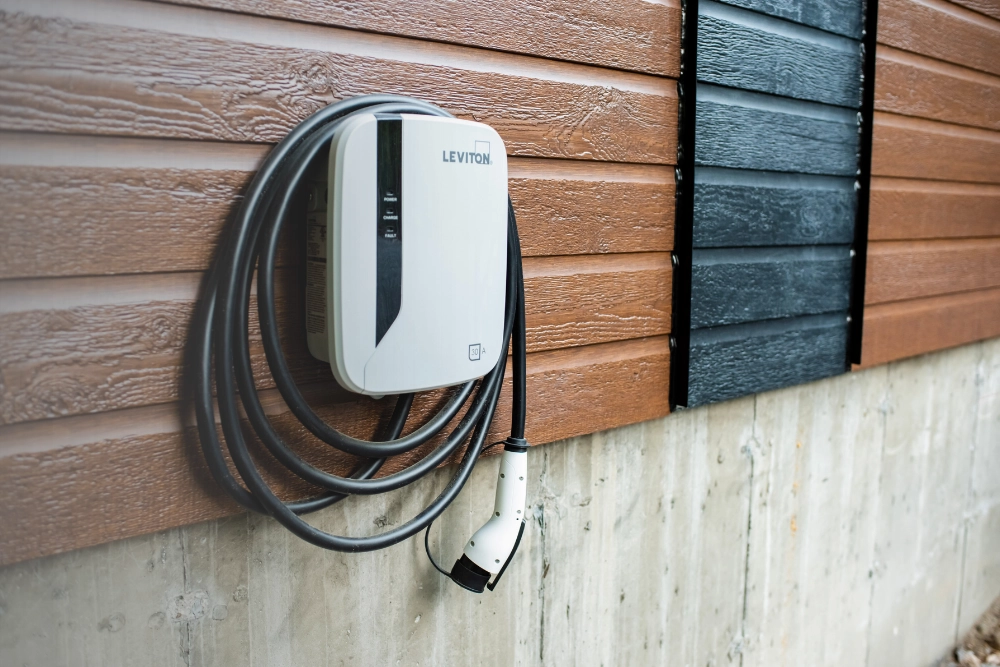
If you're planning to install an EV charger or add major electrical equipment, consider those future energy requirements when evaluating your solar system.
For homeowners planning to transition to an electric vehicle, our EV charger installation services include evaluating electrical panel capacity and installing dedicated charging circuits. Accounting for future vehicle charging demand can help establish a more accurate solar system size.
Roof Size and Available Space
Your roof must have enough usable space to accommodate the required solar panels.
Not every part of the roof will necessarily be suitable for installation. Roof vents, skylights, chimneys, shading, and required access pathways can reduce available space.
For example, 25 panels measuring approximately 20 square feet each would occupy about 500 square feet of panel surface area. The actual roof area required may be greater depending on the layout and installation requirements.
A professional roof assessment can help determine how many panels can be safely and effectively installed.
Roof Direction and Angle
Solar panels generally produce more electricity when they receive strong, consistent sunlight.
In Arizona, south-facing roof sections often provide favorable annual solar exposure, although east- and west-facing installations can also be effective.
The ideal arrangement depends on roof pitch, shading, available space, and the times of day when your household uses electricity.
Arizona's Extreme Summer Temperatures
Arizona receives abundant sunshine, making solar energy an attractive option for many homeowners.
However, higher temperatures do not necessarily mean greater solar panel efficiency.
Solar panels typically become less efficient as their operating temperature rises. During particularly hot summer days, a panel may produce less electricity than its rated capacity would suggest under standard testing conditions.
Proper system design should account for temperature-related performance losses and expected seasonal production.
Shading and Nearby Obstructions
Trees, neighboring structures, and roof features can create shadows that reduce solar energy production.
Even partial shading can affect performance, depending on the system configuration.
A site evaluation can identify potential obstructions and help determine suitable panel placement.
Does House Size Determine How Many Solar Panels You Need?
House size can influence electricity consumption, but it does not determine solar panel requirements by itself.
A well-insulated 2,500-square-foot home with efficient appliances may consume less electricity than a smaller property with older cooling equipment.
For that reason, estimates based only on square footage should be treated as rough starting points.
Your historical electricity consumption provides a more useful basis for calculating the solar system size.
How Many Solar Panels Do You Need to Offset Your Electricity Usage?
Some homeowners want solar panels to offset most of their annual electricity consumption, while others prefer a smaller system that reduces reliance on utility-supplied electricity.
Your desired level of energy offset affects the number of panels needed.
For example, suppose your home uses 14,400 kWh annually and a proposed solar system is expected to produce 12,000 kWh per year.
The estimated annual production offset would be:
12,000 ÷ 14,400 × 100 = 83.3%
This means the system is projected to generate electricity equivalent to approximately 83% of your annual usage.
However, producing electricity equivalent to your annual consumption does not necessarily eliminate your electricity bill. Utility rate structures, fixed charges, compensation for exported electricity, and the timing of electricity usage all affect the financial outcome.
Should You Include Battery Backup With Your Solar Panels?
Solar panels and battery backup systems serve different purposes.
Solar panels generate electricity when sunlight is available. A compatible battery system stores electricity for later use, subject to its capacity and operating configuration.
Battery backup may be worth considering if you want to:
- Store some of your daytime solar production
- Use stored energy during evening hours
- Support selected household circuits during power outages
- Reduce reliance on grid electricity during certain periods
Battery capacity and solar panel quantity should be evaluated separately.
Our battery backup installation services include assessing household electrical loads, determining suitable battery capacity, and evaluating integration with existing or planned solar systems.
At AZ Dave's Electric, we provide solar installation and battery backup solutions for homeowners in Fountain Hills and surrounding Greater Phoenix communities. Our team can help you explore an electrical setup suited to your household's needs.
Planning a Solar Installation for Your Arizona Home
Before selecting a solar system, it's helpful to evaluate your property's electrical infrastructure and energy requirements.
Your planning process should consider your existing electrical panel, roof conditions, current electricity consumption, and potential future electrical upgrades.
For example, adding an electric vehicle charger or switching from gas to electric appliances may increase your household's electricity demand.
The electrical panel must also be evaluated to determine whether it can accommodate the proposed solar installation. Depending on the existing equipment and system requirements, electrical panel upgrades may be necessary to support the installation safely.
A solar installation should also comply with applicable electrical and building requirements.
For homeowners in the Phoenix metropolitan area, reviewing the available electrical service areas can help confirm whether professional solar installation and related electrical services are available in their community.
Frequently Asked Questions
Can 10 solar panels power a house in Arizona?
Ten 400-watt panels create a 4 kW solar array. Whether that is sufficient depends on your household's electricity usage and the system's actual annual production. It may offset a meaningful portion of consumption for a low-energy household but may not meet the needs of a larger home.
How many solar panels do I need for a 2,000-square-foot house?
There is no fixed number based on square footage alone. Review your annual electricity consumption and use a location-specific production estimate to determine the approximate system size. Air conditioning, insulation, and appliance efficiency can substantially affect your requirements.
Do solar panels work during Arizona's extreme summer heat?
Yes. Solar panels continue generating electricity during hot weather when sunlight is available. However, high panel temperatures can reduce efficiency, so heat-related losses should be considered when estimating solar production.
Can solar panels power my home during a power outage?
Most standard grid-connected solar systems shut down during utility outages for safety. A properly designed system with compatible battery storage and backup equipment may provide electricity to selected household circuits during an outage.
How do I know if my roof is suitable for solar panels?
Roof suitability depends on structural condition, usable space, orientation, shading, and installation requirements. A professional assessment can identify whether your roof can accommodate a solar system and whether any improvements are necessary before installation.
Get Help Planning Your Solar Installation in Arizona
Determining how many solar panels you need starts with understanding your home's electricity consumption, roof conditions, and long-term energy goals.
At AZ Dave's Electric, we help homeowners explore solar installation solutions throughout Fountain Hills, Scottsdale, Phoenix, Mesa, and surrounding Greater Phoenix communities.
If you're considering solar energy for your home, our team can help you evaluate your electrical requirements and discuss available installation options.
Call us at (602) 737-3815 or contact AZ Dave's Electric to discuss your solar installation project.
Need an electrician today?
Call AZ Dave's Electric for service calls, repairs, and panel upgrades across the Valley. Licensed, insured, and available 24/7 for emergencies.
- Phone
- (602) 737-3815
- Address
- 16605 E Avenue of the Fountains
PO Box 20350
Fountain Hills, AZ 85268 - License
- ROC346512